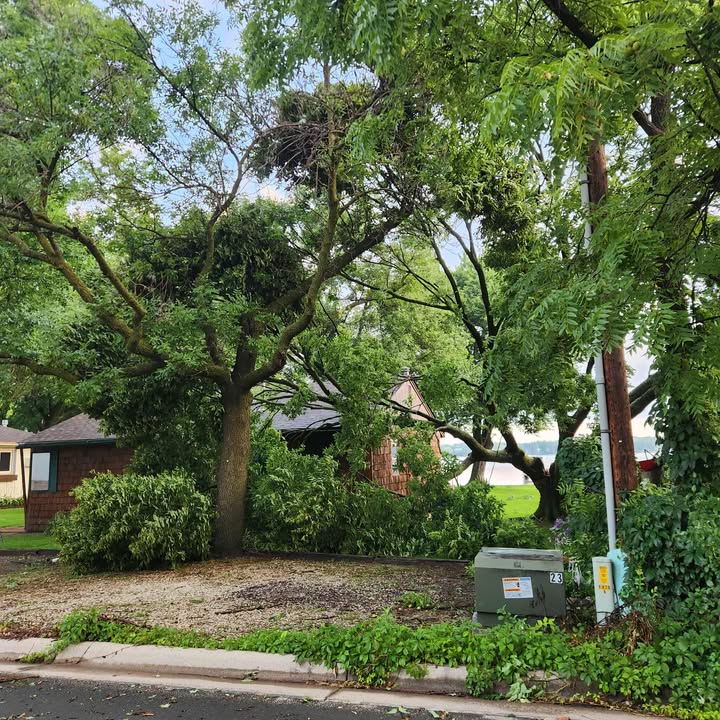
Whether it’s during a storm or on a clear, sunny day, power outages can occur without warning. MVEC line workers are committed to restoring service as quickly as possible, always with safety as the top priority.
Here’s how you can stay safe during an outage:
- Avoid going outside at night to inspect storm damage. Downed power lines and debris may be hidden and pose serious risks.
- Never attempt to remove trees tangled in power lines. Leave this to trained professionals.
- Stay clear of downed power lines. Always assume they are live and dangerous.
- Do not walk through standing water. It may conceal energized power lines or other electrical hazards.
- Call 911 for emergency assistance.
Your safety matters. Please take these precautions seriously and let our crews do their work safely and efficiently.
What to check first
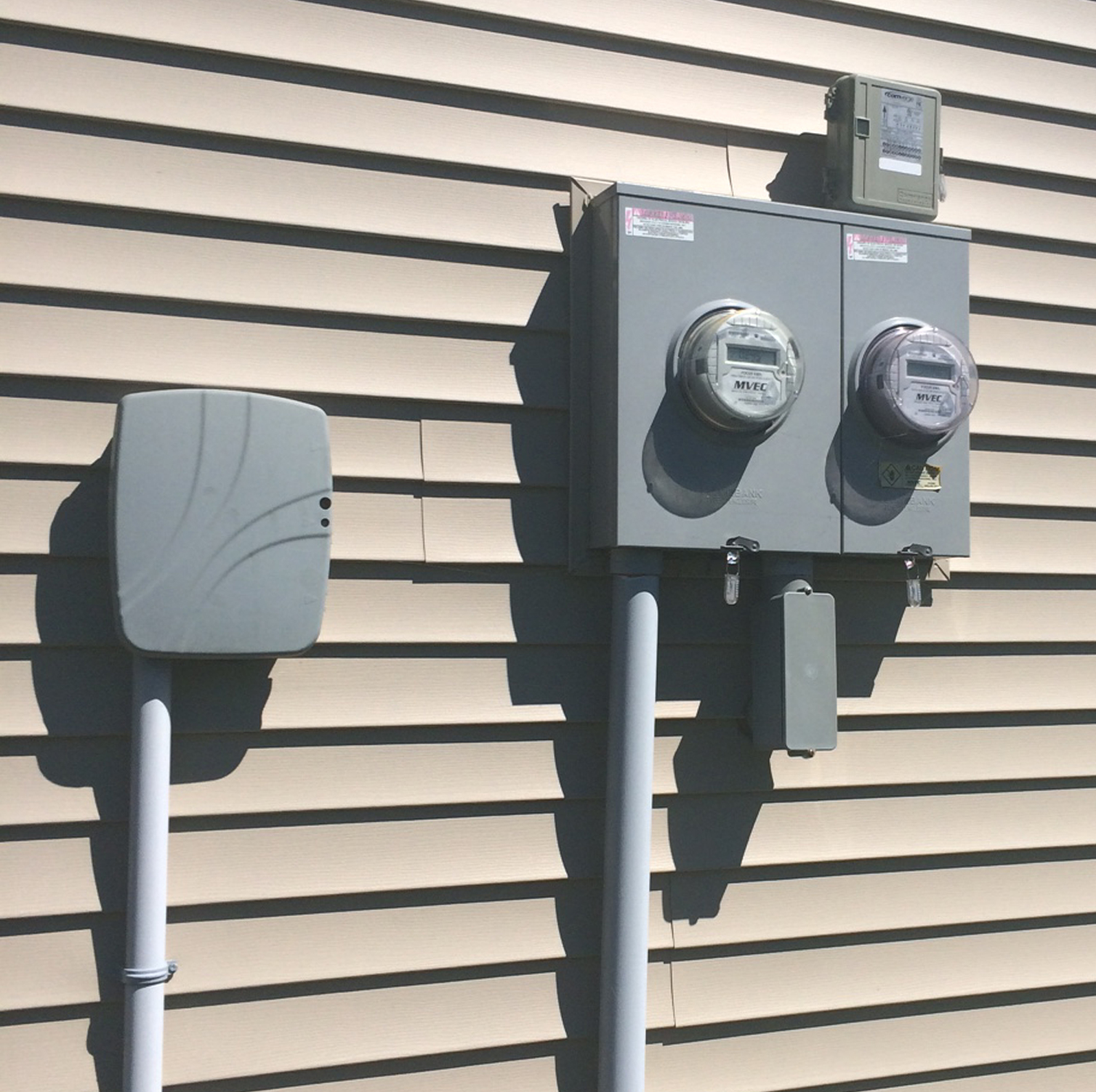
If you have a power outage and your meter is on the house:
- Turn everything off.
- Check fuses in the main fuse cabinet. Replace both fuses or have fuses checked or check breaker in main service cabinet. Flip breaker off and on and set to the “on” position.
- If you are not able to check the fuses or breaker, possibly ask a neighbor to check them.
- If there is any problem with the meter socket, it is the member’s responsibility to have it repaired or replaced.
- Are there any wires or poles down along the main line?
- Are there trees on the lines?
- Did you hear a loud noise outside?
Contact MVEC dispatch for assistance at (952) 492-8255 or (800) 232-2328.
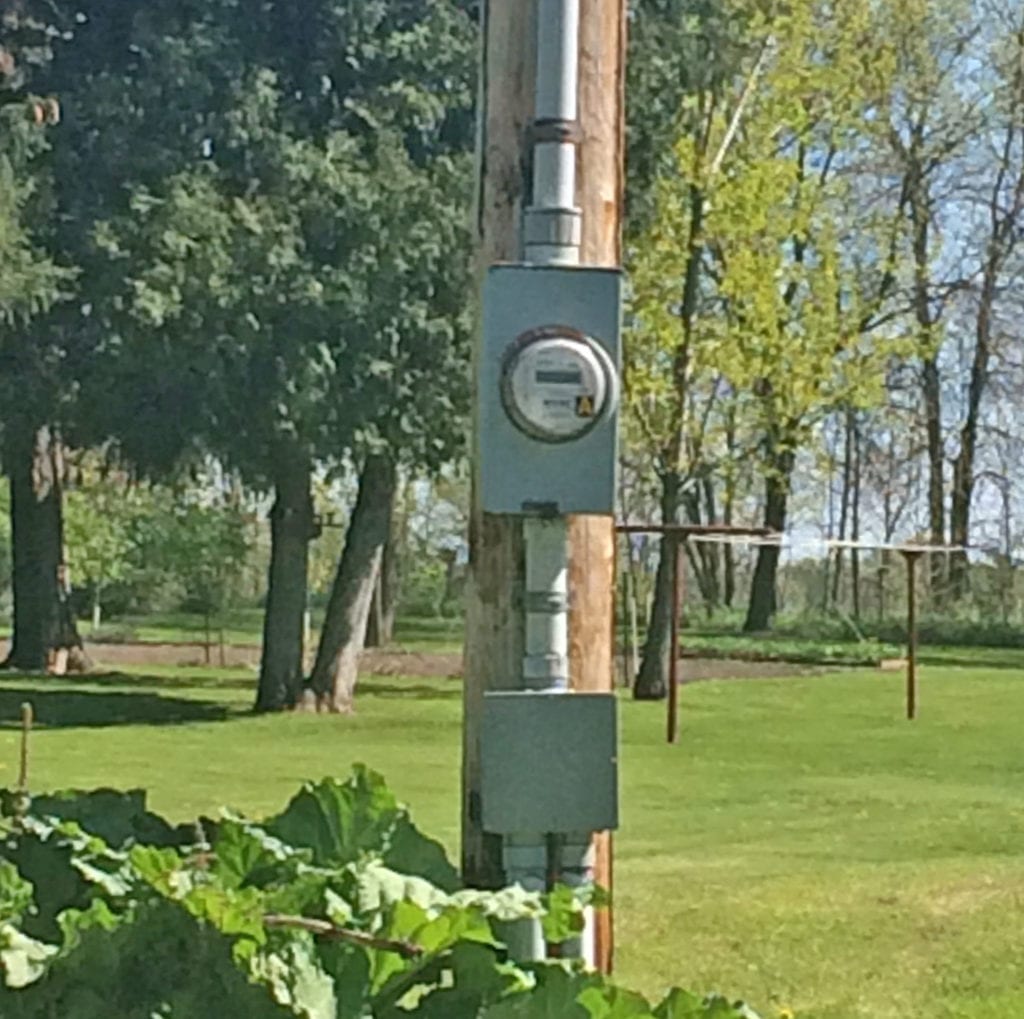
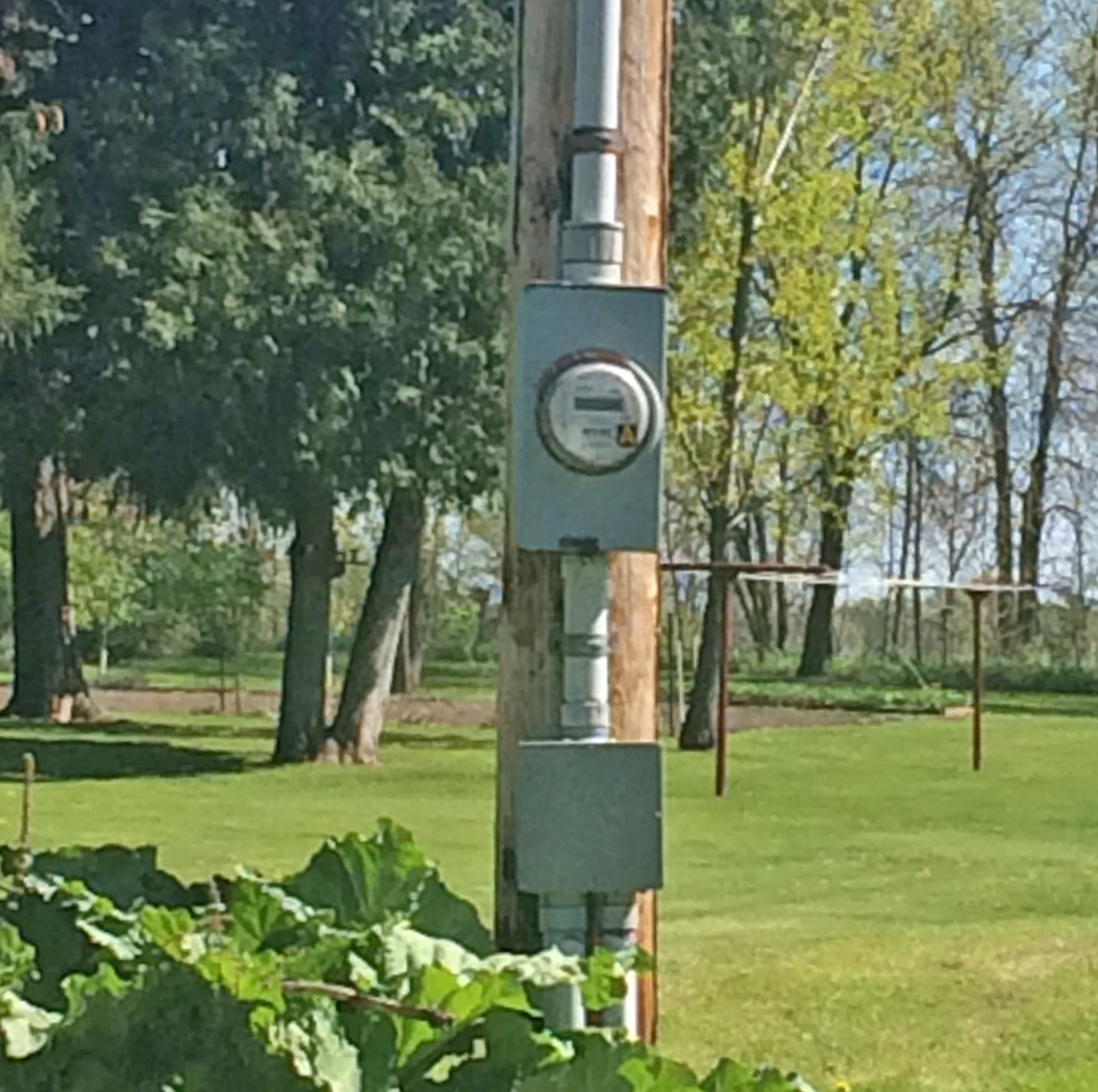
If you have a power outage and your meter is on the yard pole:
- Turn everything off.
- Check fuses under meter socket. Replace both fuses or have fuses checked or check breaker under the meter socket. Flip breaker off and on and set to the “on” position.
- If you are not able to check the fuses or breaker, possibly ask a neighbor to check them.
- Wires going to other buildings from the yard pole are the member’s own responsibility and the member must get an electrician to make repairs.
- Are there any wires or poles down along the main line?
- Are there trees on the lines?
- Did you hear a load noise outside? Contact MVEC dispatch for assistance at (952) 492-8255 or (800) 232-2328.
Power Restoration Process
- Keeping the public safe is the top priority. Crews will first clear fallen lines from the roadways.
- Once roadways have been cleared, work begins on restoring power to substations, if necessary. Sometimes service to hundreds of members can be restored immediately by restoring power at the substation.
- Next, major distribution feeders are repaired. These are the lines that come from the substation. If energy isn’t flowing over these lines, your home cannot receive power.
- Tap lines are repaired next. These lines carry power to groups of homes from distribution feeders. Sometimes taps need to be disconnected to get the main lines back on.
- Finally, individual service lines are repaired. While MVEC is responsible for getting the electricity to your meter, members must contact an electrician to repair damage to member-owned electric equipment.

Frequently-Asked Questions
We wish we had a crystal ball! Each outage is different, and many factors affect restoration time. For small, one-location outages, MVEC’s average restoration time is about an hour. But when thousands of homes are affected, it takes longer because of outage complexity, available crews, and repair needs. You might be among the first restored—or the last—depending on where the problem occurred. Giving a precise estimate isn’t possible during widespread outages.
When storms hit after hours, our linemen respond from home or wherever they are—just like everyone else. They grab their trucks, assess the situation (often patrolling miles of line to find the issue), and may need to return for materials like poles or transformers. Sometimes the fix is simple, like resetting a fuse; other times, it involves replacing major equipment.
Cleanup of trees, branches, and other debris on private property is the responsibility of the property owner.
Unfortunately, no! Linemen say mosquitoes and deer flies can be worse up high. Despite bug spray and long sleeves, the pests are drawn to sweat and the safety lights worn on helmets.
Safety comes first.
Dangerous situations—like downed lines—are handled immediately.
Substations and main power lines are repaired next to restore the largest number of members.
Smaller lines and individual connections come last.
This ensures power is restored to as many people as possible, as quickly as possible.
Report trees near lines. Trees and branches are the #1 cause of outages. If you have one close to an overhead line, contact MVEC.
Keep your contact info up to date. Having your correct phone numbers on file helps us quickly locate outage areas. Update your info using our online form.
Our crews work first to restore the “backbone” of the electric system—main power lines that serve the most members. Once those are energized, we move to smaller tap lines, then individual locations. So if a truck drives by, they may be working on a higher-priority section first.
Your homes may be served by different lines or transformers. Damage to the service wires that only feed your home could also be the cause.
Even with underground service, overhead lines deliver power from substations to your area. Outages can still occur due to problems with those lines or from issues like digging damage or animal interference.
Not always. That’s why it’s important to call and report outages. Your call helps us pinpoint the location and scope of the problem.
During large outages, call volume can be high. Our automated system helps avoid busy signals and provides updates such as:
° If a crew has been assigned
° Estimated restoration times
° Callback options when power is restored
This system works best when we have your current phone number.
We must first repair main lines before restoring power to individual locations. Members who rely on medical equipment should have backup plans, such as generators, extra supplies, or alternate locations, during extended outages.
You may have an issue with equipment that’s your responsibility. MVEC maintains power lines up to your connection point:
For underground service, that’s typically a transformer, pedestal, or meter socket.
For overhead lines, it’s usually the mast on your home.
If damage occurs beyond that point, contact an electrician.
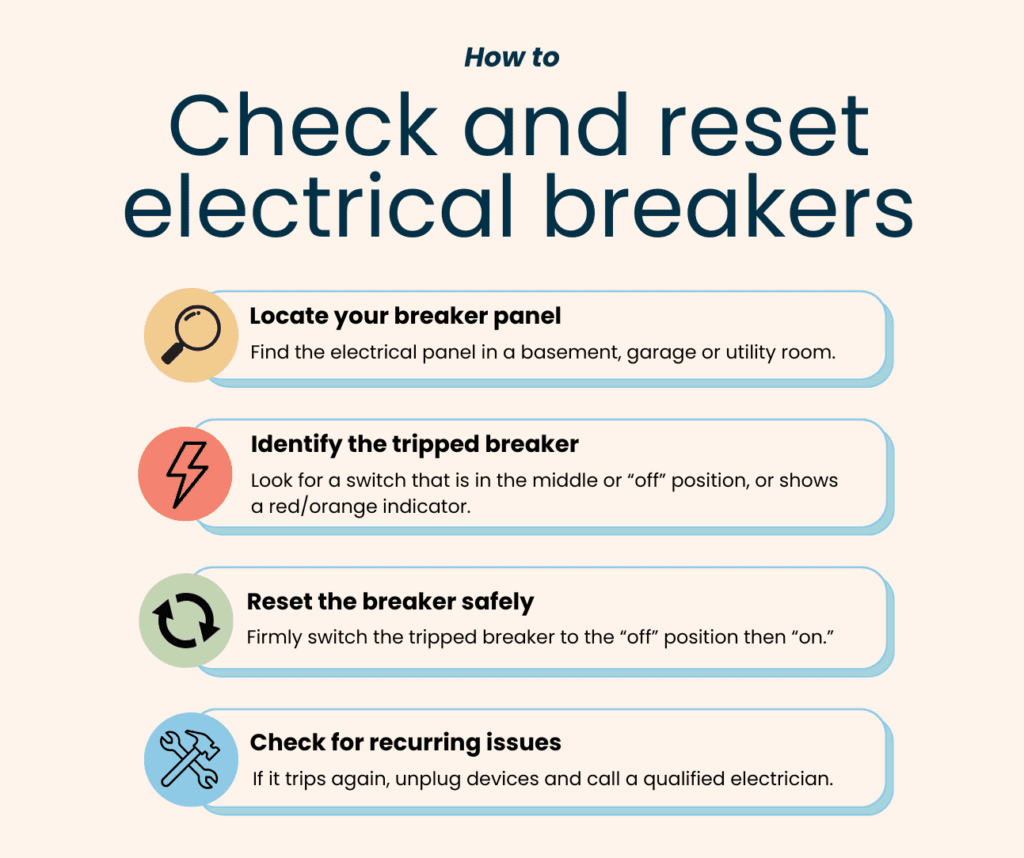
Or, it could be your breaker. See instructions at left to troubleshoot and reset your electrical breaker.
Tips while the power is out
- Turn off lights and small appliances; unplug computers, TVs and stereos. This helps avoid a surge in usage when the power is restored.
- Limit freezer and refrigerator door openings. Food will keep longer if doors remain closed. Check items for spoilage before serving. Food safety during an outage
- Do not use charcoal or gas grills indoors for cooking or heating. They produce carbon monoxide.
- If it is a winter outage, try to keep outside door openings to a minimum and use blankets, sleeping bags and extra clothes to help stay warm. Dress in layers and wear a hat. Cover drafty windows and doors with blankets. Close off doors and stay in the room with your heat source.
- Run a generator only through a properly installed transfer switch or plug appliances directly into the generator using a properly sized extension cord. Do not run the generator in enclosed spaces.
Be ready with an emergency kit
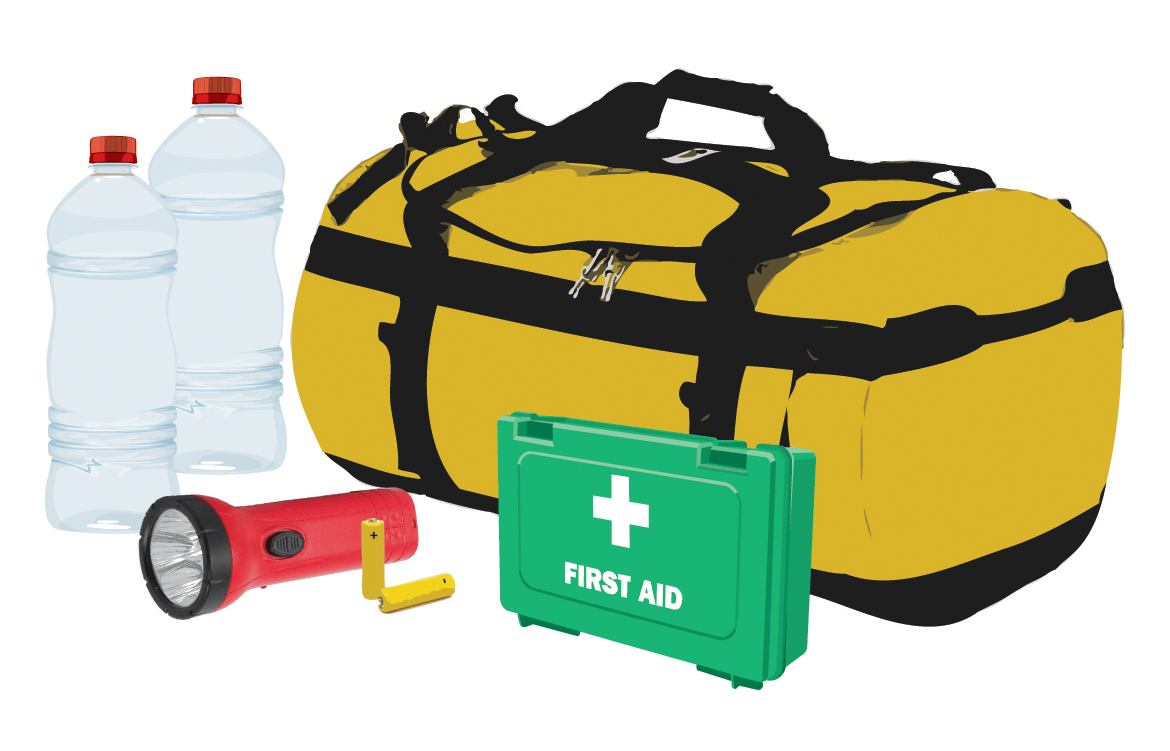
- Assemble an emergency kit including candles, matches, firewood, battery-operated radio and clock, extra blankets, sleeping bags, containers for storing water, portable fire extinguisher, easily-prepared foods, canned goods and manual can opener. How to prepare an emergency kit
- Many cordless phones require electricity and may not work during an outage. Keep your cell phones charged. When the power is off:
- Turn off lights and small appliances; unplug computers, TVs and stereos. This helps avoid a surge in usage when the power is restored.
- Limit freezer and refrigerator door openings. Food will keep longer if doors remain closed. Check items for spoilage before serving. Food safety during an outage
- Do not use charcoal or gas grills indoors for cooking or heating. They produce carbon monoxide.
- If it is a winter outage, try to keep outside door openings to a minimum and use blankets, sleeping bags and extra clothes to help stay warm. Dress in layers and wear a hat. Cover drafty windows and doors with blankets. Close off doors and stay in the room with your heat source.
- Run a generator only through a properly installed transfer switch or plug appliances directly into the generator using a properly sized extension cord. Do not run the generator in enclosed spaces.
From our video library
- Be Storm Ready: Update Your Phone Numbers (length 1:38)
- Food Safety During an Outage (length 2:08)
- How to Prepare an Emergency Kit (length 1:10)
- Automatic Garage Door Openers and Outages (length 1:04)